June 30, 2026
Joe Girard Didn’t Have Big Data. He Had Something Better.
What Joe Girard still teaches automotive retail about customer intelligence, follow-up, and knowing the customer before the conversation starts.
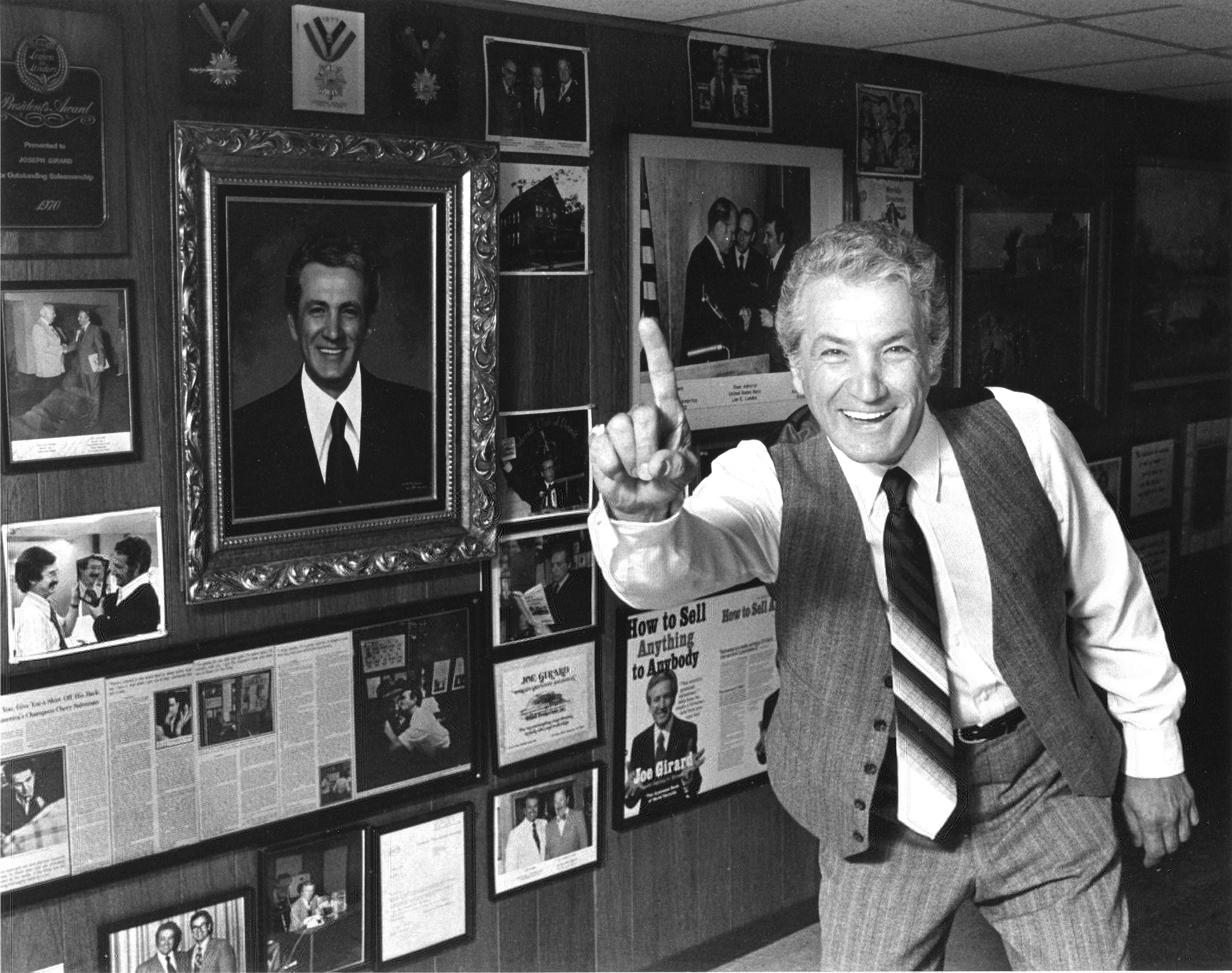
Joe Girard’s sales numbers are almost hard to believe.
In his best year, he sold 1,425 vehicles.
And this is the part that makes the number even more impressive: those were not large fleet orders. According to the Automotive Hall of Fame, Girard achieved those results one sale at a time. The same source notes that at the time, 95% of new-car dealerships in America sold fewer than 1,000 cars annually.1
Girard did more than that as one salesperson.
But the more I study his story, the less I think the real lesson is only about selling more cars.
The real lesson is that Joe Girard was not guessing.
Before he sat with the customer, he already knew the customer.
That may be the most important part of his success.
Girard’s own biography describes how his business eventually became appointment-only. Customers were screened and pre-qualified before they met him. By the time he started the conversation, he was not starting from zero. He already knew what he needed to know about that customer.2
In today’s language, Joe Girard had customer intelligence.
Only his version was analog.
He had staff. Notes. Referrals. Follow-up discipline. Personal memory. A system that prepared the conversation before the customer ever sat in front of him.
That is what fascinates me most.
Because today, we have something much bigger.
The customer is already leaving signals
Dealerships receive leads from multiple sources. We often know where the customer came from, what they searched, what they clicked, what model they showed interest in, what payment range they may be considering, whether they are already a service customer, whether they own a vehicle that may be ready for replacement, and how they prefer to communicate.
The dealership of the future will not only be about inventory, location, or price.
It will be about how intelligently we use the information we already have.
The customer is telling us more than ever before.
Customers tell us who they are through search behavior, lead forms, service history, CRM interactions, digital touchpoints, ownership patterns, and communication preferences. The information already exists.
The challenge is turning it into understanding.
The question is whether we are organized to listen.
Many dealerships already collect a lot of data. But collecting data and understanding the customer are not the same thing.
A lead source is not customer intelligence by itself.
A CRM note is not customer intelligence by itself.
A service record is not customer intelligence by itself.
A website visit is not customer intelligence by itself.
The real value comes when these signals are connected and turned into a better customer experience.
Data only matters when it improves the relationship
This is where I think many dealerships still have a major opportunity.
We already have the data, the tools, and the signals. The missing piece is not always technology. It is connecting those signals into a customer experience that feels personal rather than procedural.
To remember better.
To follow up better.
To respect the customer’s time.
To understand intent earlier.
To offer the right solution sooner.
To make the experience feel personal instead of generic.
Joe Girard proved that knowing the customer before the conversation creates an advantage.
Today, that advantage should be even stronger.
Modern dealerships do not have to rely only on memory, handwritten notes, or manual screening. We have CRM systems, digital lead sources, service history, campaign data, website behavior, call records, ownership cycles, and aftersales touchpoints.
But the discipline still matters.
Technology does not replace the habit of knowing the customer.
It only gives us a better chance to do it at scale.
Every customer is now a media channel
Girard’s “Law of 250” was built on the idea that every customer carries influence far beyond one transaction.
Today, that influence is even larger because every customer also has a digital voice.
Google reviews.
WhatsApp groups.
Instagram stories.
LinkedIn comments.
Local reputation.
Every customer is now a media channel.
That is why the future of automotive retail is not just sales.
It is data-driven relationship management.
Joe Girard did it manually.
Joe Girard built customer intelligence with index cards.
Today we build it with data.
The technology has changed.
The competitive advantage has not.